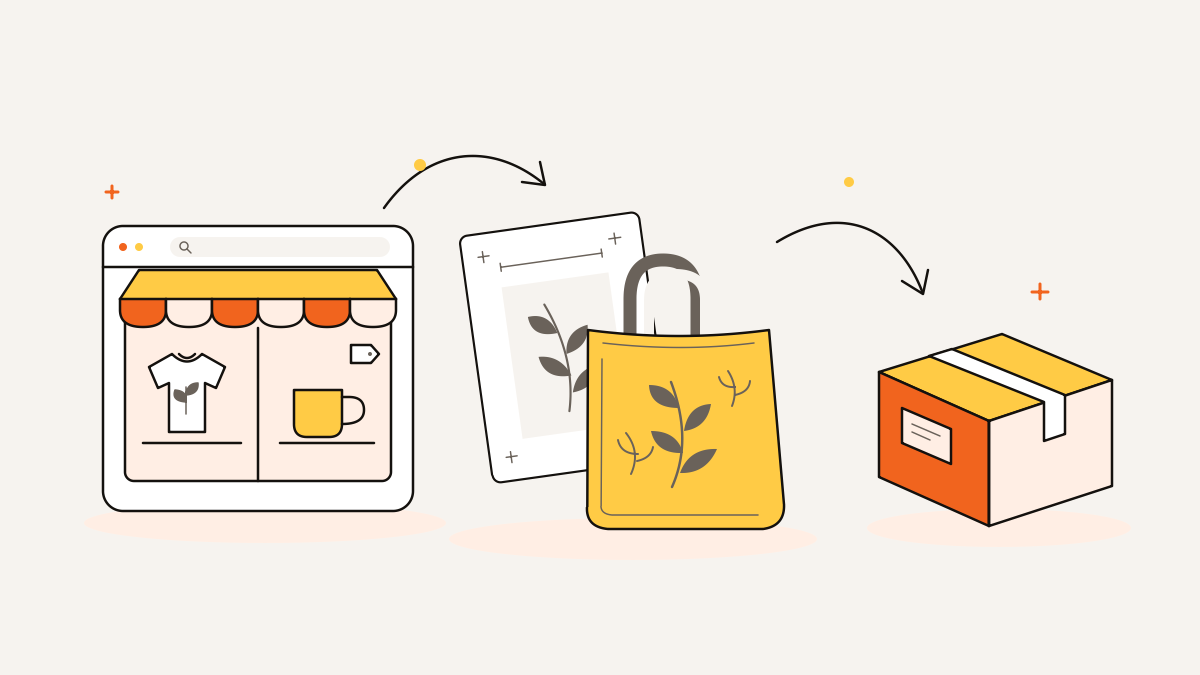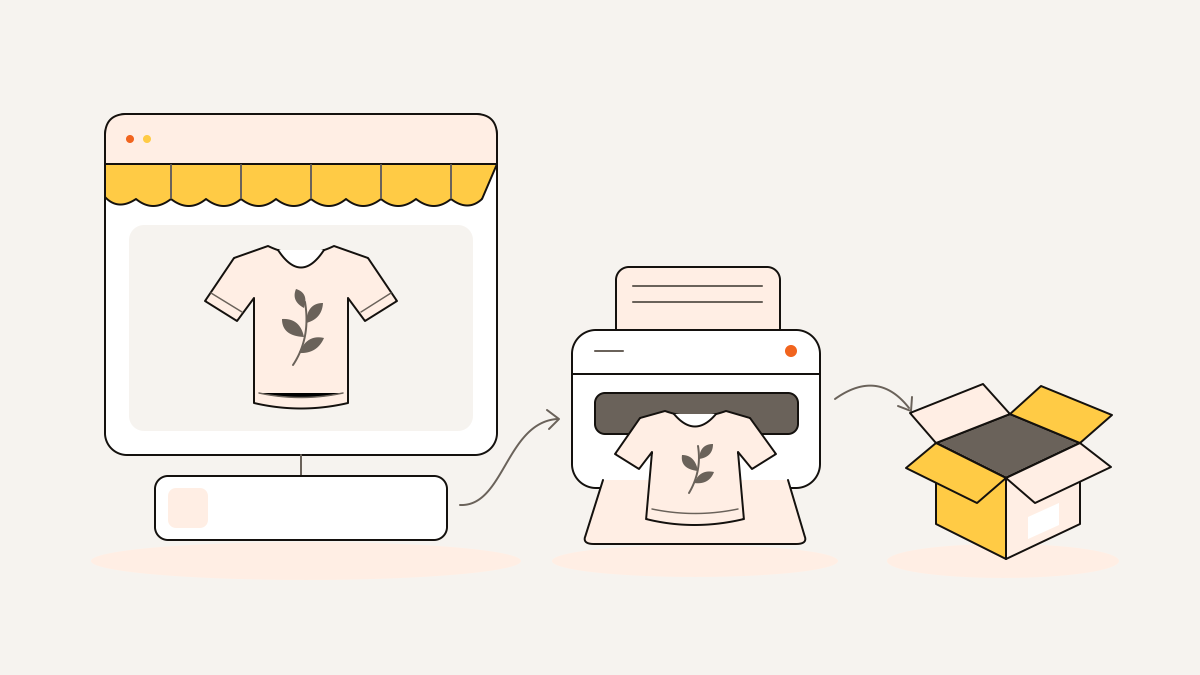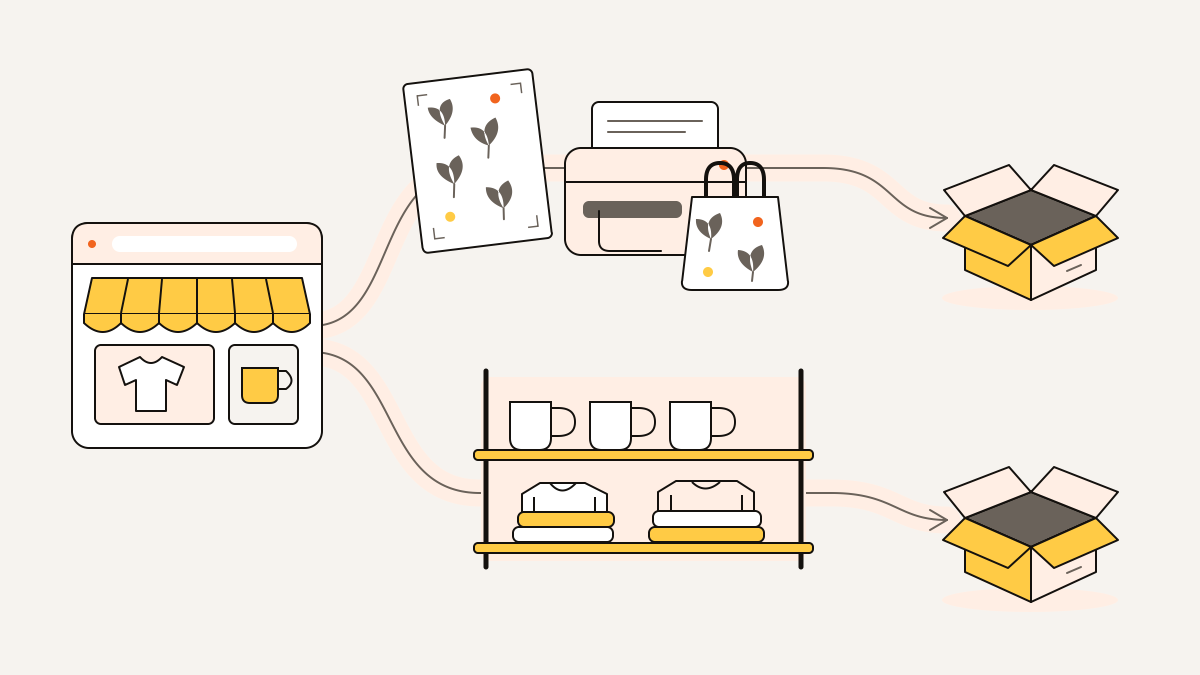
If you’re choosing between print on demand and dropshipping on Etsy, print on demand with your own designs usually fits a creative shop better. With print on demand (POD), your designs go on products made after purchase. Traditional dropshipping means selling a supplier’s ready-made products. In both cases, another company packs and ships your orders.
For a practical example, follow a digital-art shop turning its downloadable botanical art into a physical print.
How the two models work on Etsy
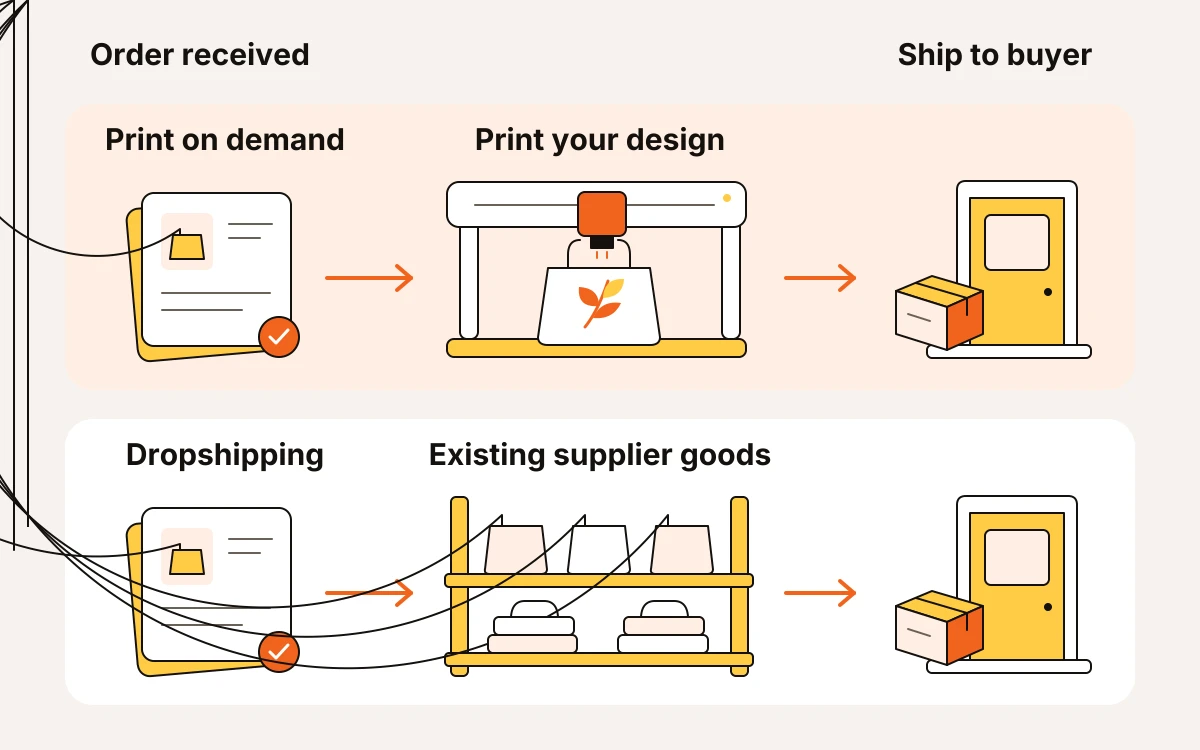
Print on demand (POD) puts your designs onto products after an order comes in. Traditional dropshipping sends a supplier’s existing goods to the buyer. Both let you fill online orders through a supplier.
| What changes | Print on demand | Traditional dropshipping |
|---|---|---|
| Customization | Your design goes on a blank product | You usually sell the product as supplied |
| Product range | Limited by blank products and print options available | A broader choice of ready-made goods |
| Filling orders | Supplier selects the blank product, prints, packs, and ships | Supplier picks, packs, and ships existing goods |
| Startup spending | Plan for getting designs ready and ordering samples | Plan for product samples and getting listings ready |
| Your responsibility | Correct designs, listing details, and customer support | Correct product details, listing details, and customer support |
With either approach, you don’t need to keep stock or run a warehouse. You still handle customer service, returns, and shipping problems.
Before you build an Etsy listing, check whether Etsy allows the product. A production partner is a business that makes a product from your original design. Choosing an item from a catalog doesn’t make it your creative work. If you sell POD products with your original designs, name the production partner in the listing. You also need to state correctly where the item ships from.
Etsy publishes its current rules for allowed products in its Creativity Standards. Etsy allows resale in certain categories, including craft supplies that meet its rules. Ordinary catalog goods don’t fall within that exception. Offering buyers a way to customize a product doesn’t, by itself, make it allowed.
Compare total cost and the work you want
Compare the full order cost, your share of the work, and the buyer’s wait.
- Work out what each sale leaves you. Start with the money from the sale. Subtract the cost of preparing and sending the order, Etsy fees, shipping you cover, and marketing. A print-on-demand (POD) quote may include printing, packaging, and the labor to make the product. Check what’s included before comparing it with a ready-made product’s price. Samples, design help, product testing, and any paid tools need a separate budget. Neither route is free to start just because you don’t keep stock.
- Choose work you’re willing to keep doing. With POD, you’ll spend more time creating and updating designs. Reselling products Etsy allows means more time finding suppliers, checking products, and keeping track of stock. Both need marketing. If you already make digital art, adapting your own artwork may be a more useful starting point. Otherwise, you’d be learning an unrelated supplier catalog. Neither type of work guarantees faster earnings.
- Add processing time and shipping time to compare the buyer’s full wait. Processing time covers the work before the parcel ships. Shipping time is the time it spends traveling afterward. POD adds time to make the product before the parcel leaves. Ready-made stock can still arrive slowly when suppliers ship from overseas or split orders across locations. The supplier’s shipping estimate covers only part of that wait.
A digital-art shop chooses its first physical print
For the botanical-art shop, the first physical product is a poster of its original artwork.
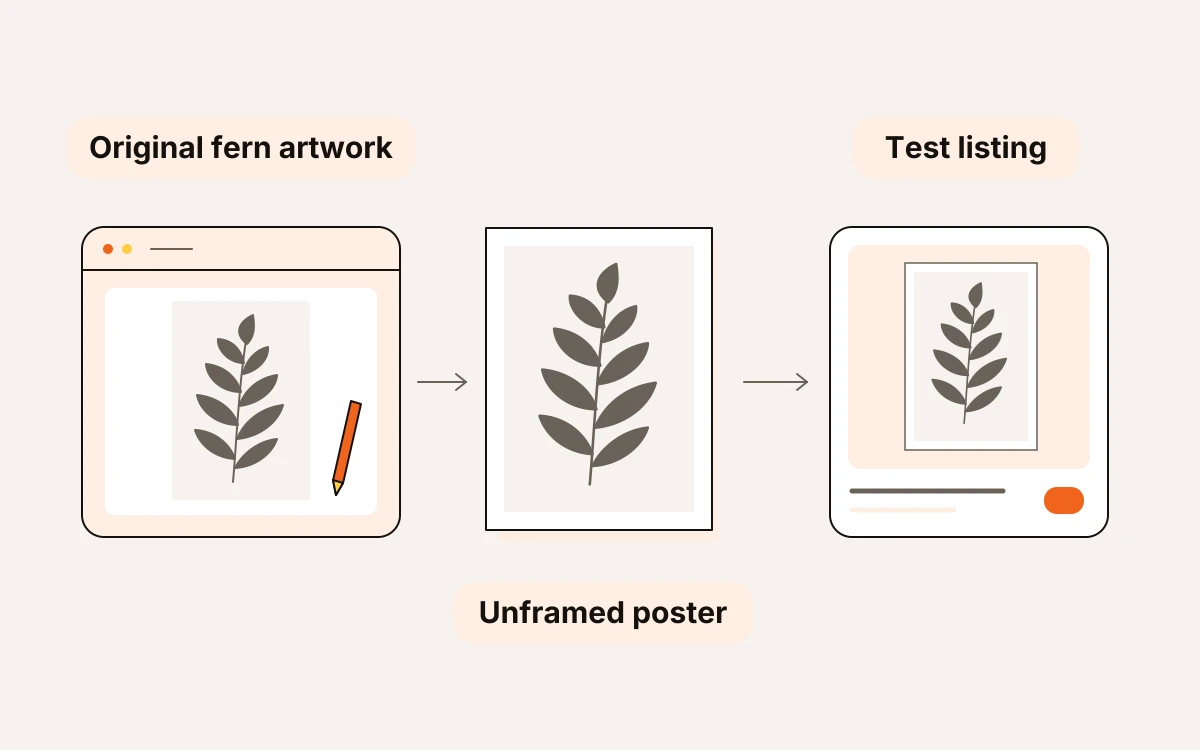
Use your fern illustration for a test listing titled “Botanical Fern Art Print — Unframed Poster.” It extends what your shop already sells.
Before publishing, run this short checklist:
- Get a quote for the exact poster. It should cover the paper, size, printing method, packaging, and any inserts. A quote for a different product won’t tell you whether this poster is worth selling.
- Calculate what each order leaves. Enter your actual supplier quote and planned selling price into eMarketInsight’s free POD profit calculator. Include any Etsy fees that apply, plus shipping and marketing costs. If you offer free shipping, you still pay the supplier’s shipping charge.
- Order a sample to check the fern’s fine lines, colors, paper, and packaging. Your downloadable file hasn’t had to survive a delivery truck.
- Use the Etsy POD setup guide to prepare your listing for printing and shipping orders. It covers production partner details and processing time.
If the sample passes and the price covers those costs with profit left over, test the original-art poster. Otherwise, keep the download available while you adjust the physical product or its price. Your digital listing can stay useful without becoming a parcel.
Mistakes that turn outsourced fulfillment into extra work
Having a supplier fill your orders gets harder when your listing promises something they can’t deliver. Check these details before you send orders their way:
- Assuming returns happen automatically. Find out how your supplier handles damage, misprints, returns, and exchanges before a customer complains. You’ll need to know what photos they require, who approves a replacement, and who pays.
- Adding suppliers without checking split shipments, where one order ships in separate parcels. Before you add more products, price a basket with items from different suppliers. If it needs separate parcels, count each shipping charge in your costs. Explain to buyers that their items may arrive separately.
Set a review date before expanding
Set a date to review buyer questions and the actual costs once orders arrive. Include production charges, Etsy fees, shipping, and marketing. If questions keep coming up or costs exceed your plan, fix the listing or price before adding products.