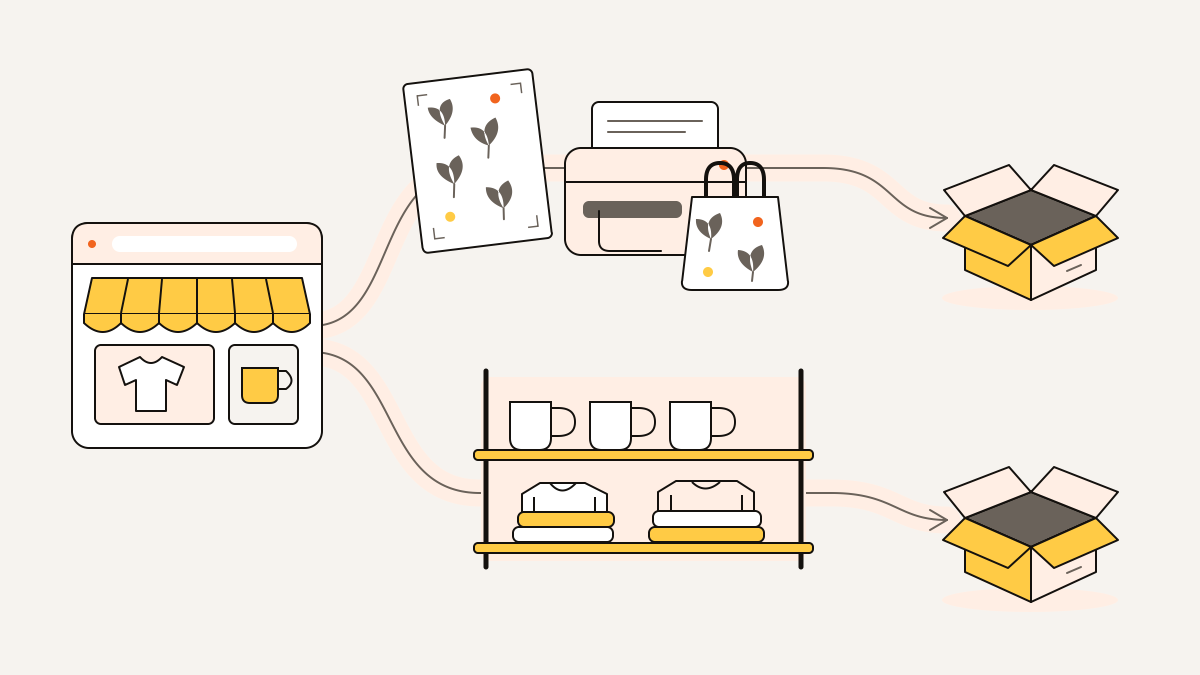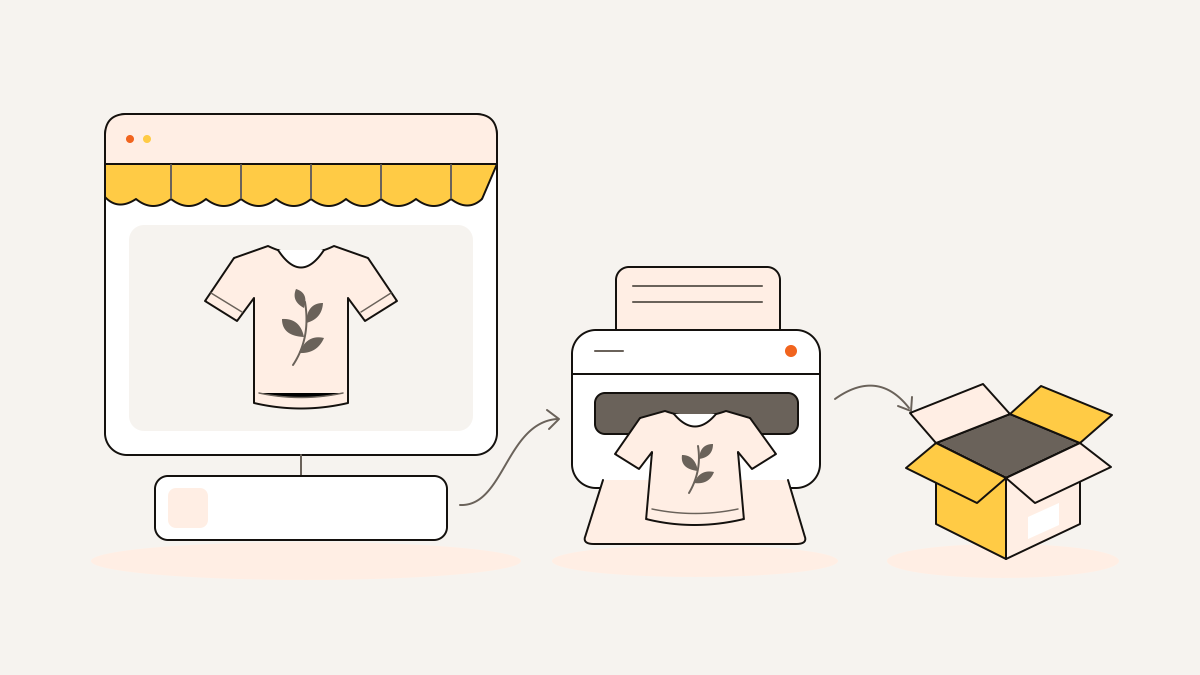
For eco friendly print on demand (POD), start with Teemill for organic cotton clothing. Try Inkthreadable for plastic-free shipping packaging, or TwoFifteen for documented details about its ink and recycled mailers.
Making products only after an order means fewer unsold items. Still, POD alone doesn’t make an item sustainable. When choosing a product, weigh its materials, packaging and delivery route. Check its margin, too: how much you keep after costs.
Start with a short list of suppliers and specific claims you can back up. Then plan your first organic cotton shirt listing. Before adding a wider range, check how orders are made and shipped. Work out what’s left after the cost of making and delivering the item and Etsy fees. This keeps your first listing manageable while you decide whether to add more products.
What changes when you sell a greener POD product?
Your supplier prints and ships the product after a buyer places an order. You handle the Etsy listing and help the customer. You don’t need to hold stock or pack orders yourself.
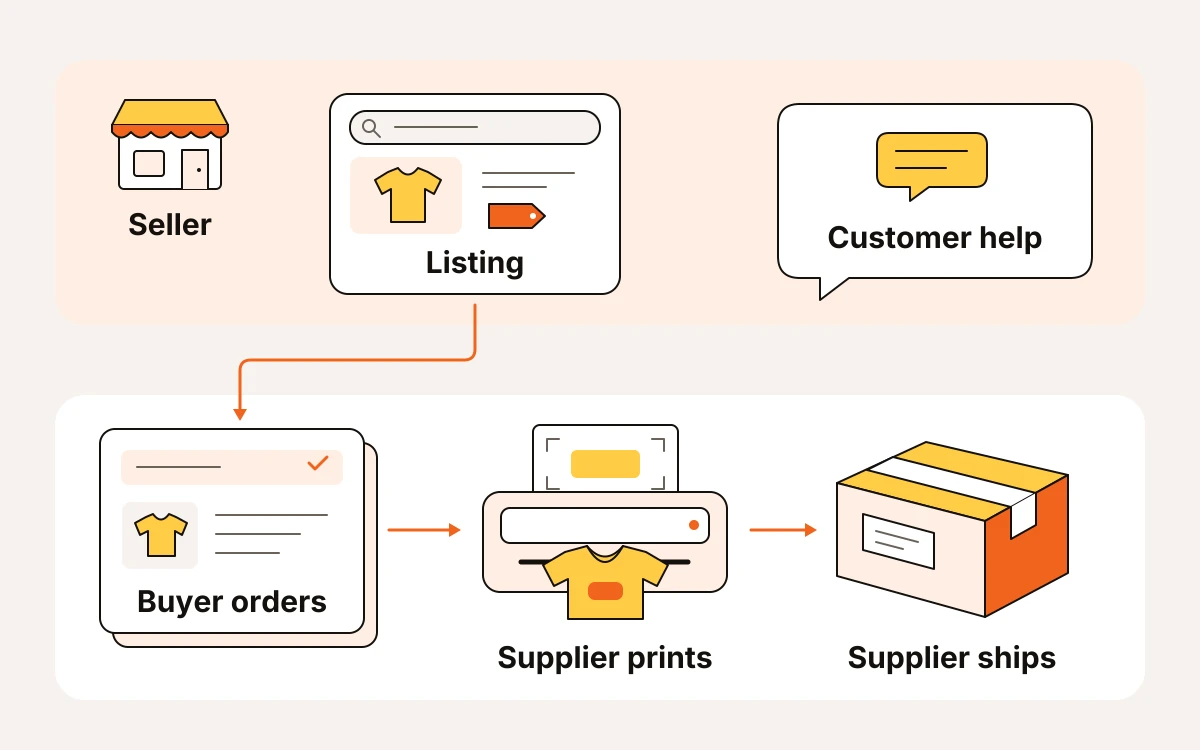
Compared with ordering a large batch of printed shirts upfront, you avoid paying for shirts that never sell. That means fewer leftover shirts. Each shirt still affects the environment through how it’s made, printed, packed and delivered.
Here’s what you’re responsible for:
- Describe the exact product. What you say about its materials and packaging must match the item you’re ordering.
- Set a realistic processing time: the time needed to get an order ready to ship. Base it on the supplier’s production schedule, and keep it separate from shipping time.
- Handle buyer communication. If an order is late or the print is wrong, the buyer comes to you. That’s still your job even though the printer makes and ships the order.
Add the supplier as your production partner, the company that makes your item, during listing setup.
Which suppliers should you check first?
Check the shirt’s material first, then the packaging and ink details your buyers care about. Before choosing a supplier below, find out where the exact product is printed and shipped from.
- Teemill is a good starting point for organic cotton clothing. Its clothing uses GOTS-certified organic cotton, meaning the cotton meets that certification’s standards. Designs are added with digital printing technology that produces little waste. Plastic-free packaging comes standard on every order. If organic cotton is central to your listing, check the chosen garment’s material details. Review the paperwork for its certification before ordering a sample.
- Inkthreadable is worth checking when plastic in shipping packages is your main concern. It has removed plastic from all shipment packages, making it a useful option for plastic-free packaging. You’ll still need to check which fibers the garment contains against your material priorities. Its noted turnaround is 3–7 days. Confirm the current schedule and whether those are business days before setting your processing time.
- TwoFifteen is worth checking for its ink and recycled mailing bags. It uses OEKO-TEX certified water-based ink, meaning the ink meets that certification’s standards. Its mailing bags are made from 100% recycled materials. Describe those bags precisely in your listing: recycled mailing bags are different from plastic-free packaging. Orders can take up to 5 business days to leave the supplier. Shipping time is on top of that.
Compare the route to your buyer
For either USA or UK buyers, ask where the chosen product will actually be printed and shipped from. The supplier’s location is only part of the picture. Compare the shipping service for your buyer’s destination and the estimated delivery time. Include any charges for crossing borders.
If the shipping route makes delivery too slow, change the product or supplier before building the listing.
Build one organic cotton shirt listing
Choose a shirt that meets your fabric, delivery, and profit needs before building the listing. Say you sell botanical shirts to UK gardeners. Compare a suitable Teemill blank, an unprinted shirt, with your current supplier’s quote including delivery.
Compare the same order
Use your wildflower illustration for both quotes. Keep the size, print placement, and UK delivery address the same. Record the shirt and printing cost, shipping, and any tax that applies as separate amounts. This lets you compare the full cost with delivery.
You’ll also need documents showing that the exact blank uses organic cotton. If Teemill costs more, work out the selling price you’d need before switching.
Check what the sale leaves
Enter your planned selling price in eMarketInsight’s free Etsy fee calculator. Add buyer-paid shipping and your actual quoted costs in the matching fields. Include Etsy fees, including Etsy Payments, the payment processing fee. Add any Offsite Ads fee that applies, which covers sales from Etsy’s ads outside Etsy.
Subtract the supplier’s full cost, including delivery, from the money left after fees. What remains needs to cover your target profit and money set aside for replacements. If it falls short, adjust the price or choose another blank. A quote that leaves out shipping can look cheaper than it is.
Turn the verified details into the listing
Once you’ve checked the selected blank’s fabric against its documents, use this title:
Organic Cotton Botanical T-Shirt, Wildflower Garden Illustration.
Describe the shirt’s fit, fabric, sizing, and printed illustration.
Before publishing:
- Add the supplier as your production partner, the business that makes the shirt for you.
- Make delivery estimates match the actual shipping route.
- Save the supplier quote and material documents with your listing notes.
Claims that make a listing harder to trust
Replace broad green promises with product details backed by your supplier’s documents. Check which product and production stages the certification covers. Describe the finished shirt as certified only if the documentation covers that finished product, including its printing; certification of the blank or ink alone isn’t enough.
- “Planet-friendly.” Name the feature your supplier’s documents support: organic cotton fabric, plastic-free packaging, or a recycled mailing bag. Keep the claim tied to that feature on your listing. Don’t give the whole product a green badge.
- “Our shop is certified organic.” Describe the certified product rather than extending its certification to your shop. If you add a sweatshirt or a different shirt, get its documents before copying the claim.
- “Harmless, eco-safe print.” Water-based ink tells buyers what kind of ink is used. Use your supplier’s exact ink wording from its documents.
- “Sustainable bamboo.” Before calling it sustainable, ask which fibers it contains and how it’s processed. Use the material name in your supplier’s documents for your listing. The word “bamboo” alone doesn’t explain how the fabric was made.
For your botanical shirt, keep the same precise wording in the description, image captions, and shop announcement.
Run a one-product pilot this week
Check a sample and publish your botanical shirt listing before adding more products. A larger range can wait until you know what your buyer will receive.
- Order a sample to check where the print sits, its fine details and the fabric’s feel. Check the fit against the size chart, too. Wash it according to the care instructions, then check the print again.
- Inspect the packaging for damage when it arrives. Note how the shirt is presented, including whether it arrived clean and protected.
- Photograph the actual shirt, showing the print close up and how the shirt fits. Include details a mockup, or digital preview, can’t explain.
- Set your listing’s processing time using the supplier’s confirmed current production schedule.
- Publish one listing once you’ve confirmed the price covers the supplier’s actual quote, delivery and Etsy fees.
If the sample has a print or fit problem, resolve it before adding more designs. If it passes, keep this first test small. You’re checking how orders are made, packed and shipped to paying customers.