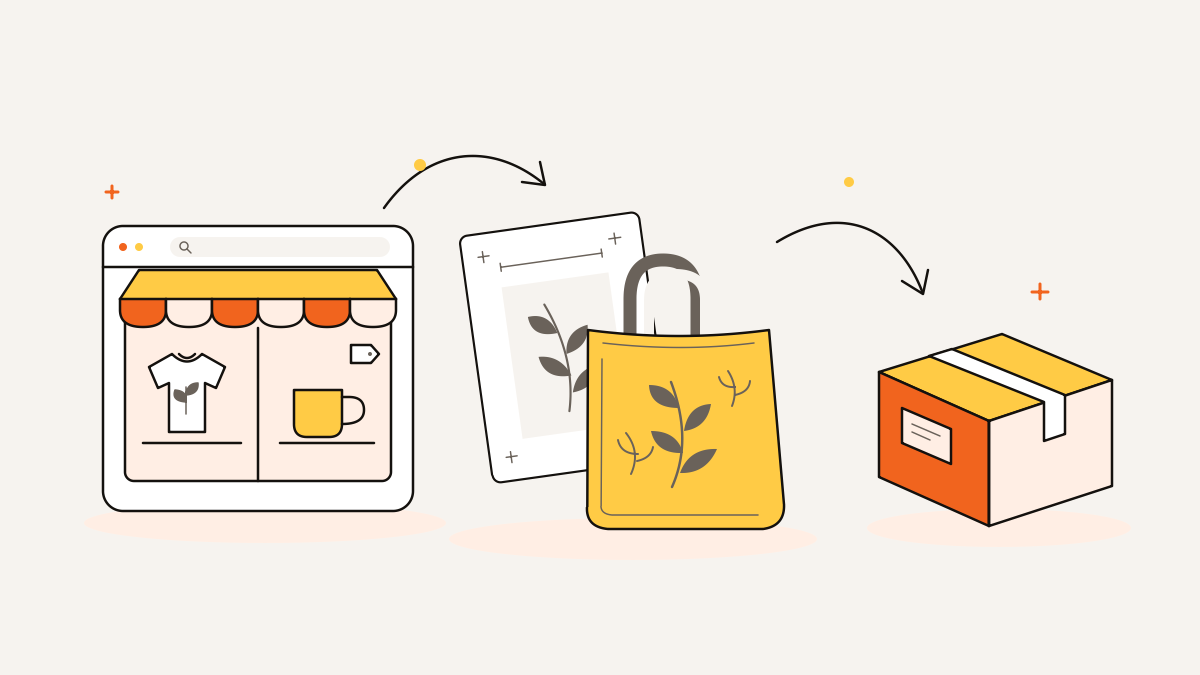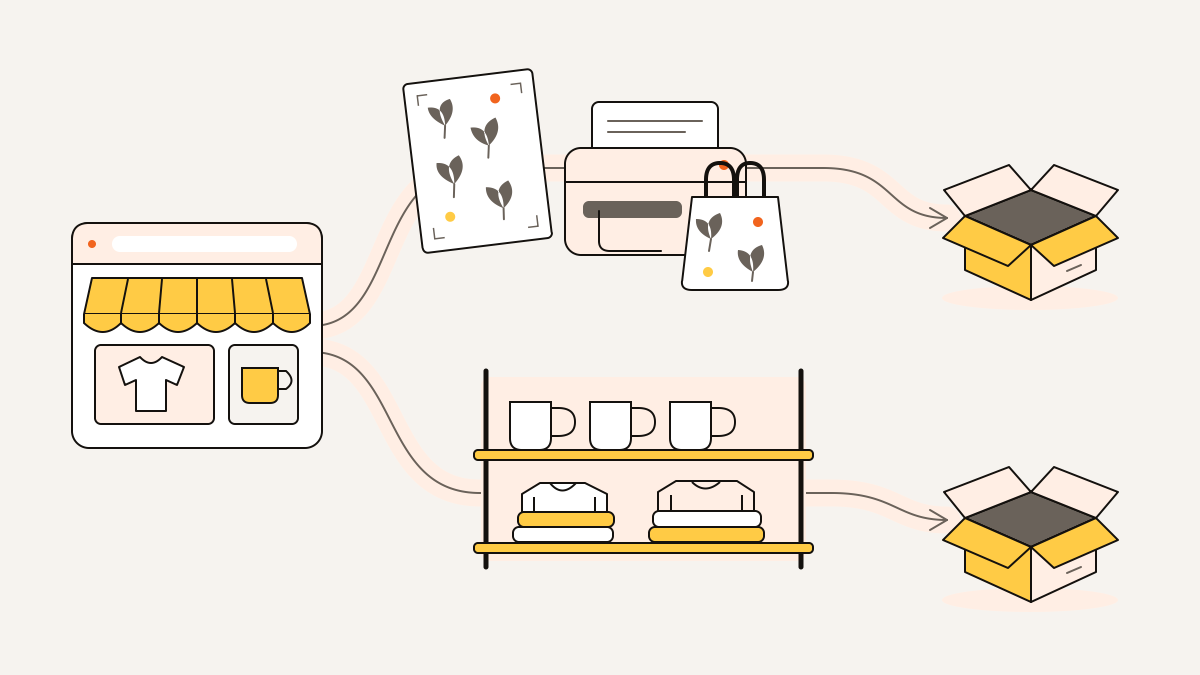
The best print on demand sites for artists depend on what you need. Redbubble puts your artwork on varied merchandise. Society6 has a marketplace focused on art prints. Zazzle lets you choose your royalty, the share you earn from a sale. Spreadshirt lets you sell through a shop or marketplace.
If you already sell on Etsy, decide what you need before opening another account. Do you want another place to sell, or a partner to handle your Etsy orders? Then compare how well each option suits your artwork and its total cost, including delivery. A small product test you can start this week will also help you compare.
Choose between another marketplace and fulfillment for Etsy
Choose another marketplace if you want a separate place to sell your artwork. Choose a fulfillment partner if you want a service to produce and ship orders placed in your Etsy shop.
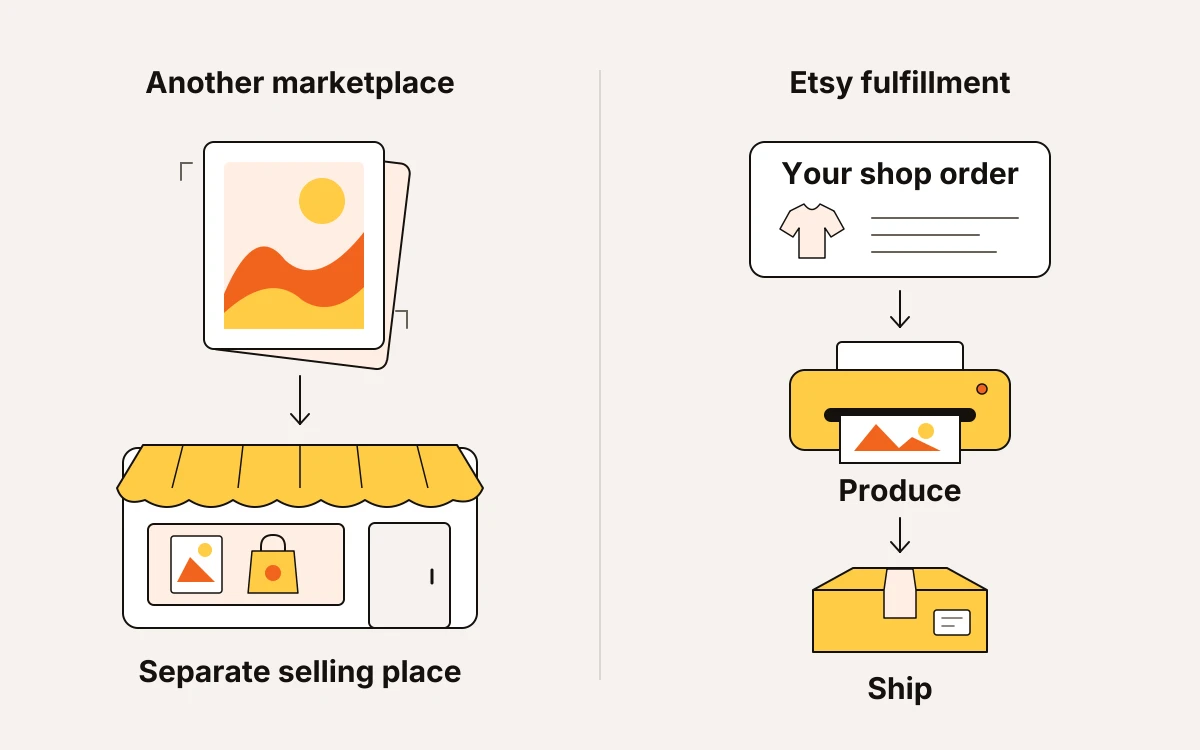
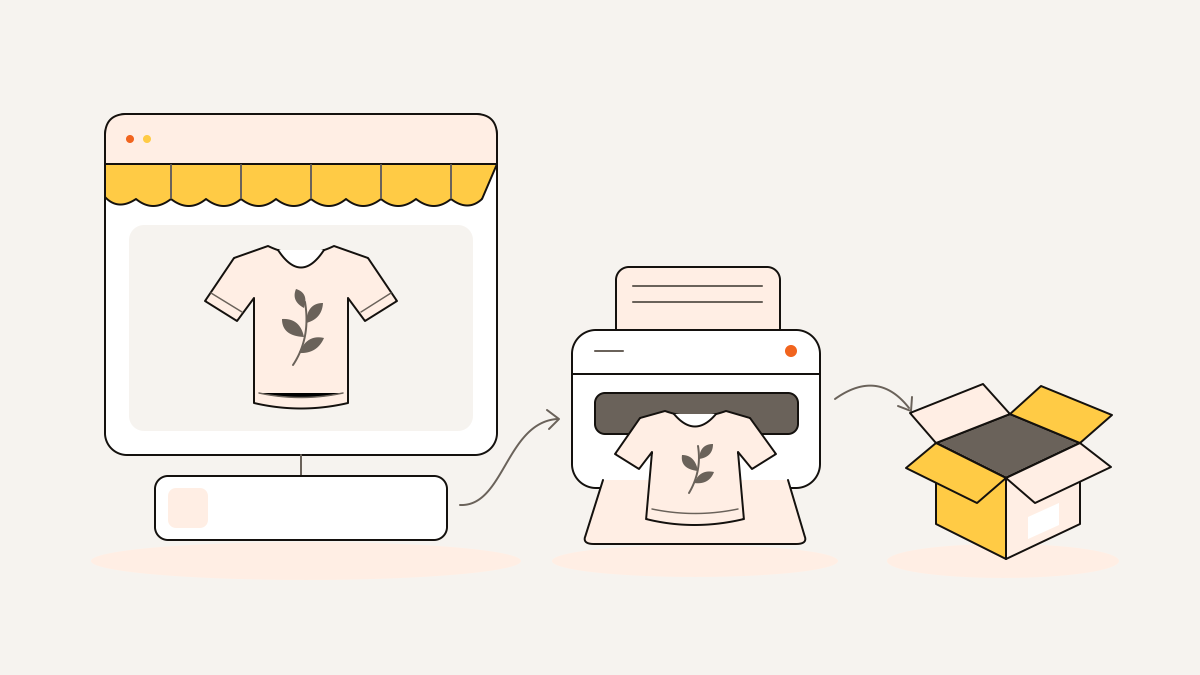
For Etsy fulfillment, start with Printful, Printify, and Gelato. These are fulfillment services, not additional marketplaces. Compare your intended product and delivery destination across them, and confirm each service’s Etsy connection. The Etsy fulfillment partner guide covers the detailed comparison.
Both can print items only after an order arrives. For your Etsy shop, though, the store connection matters more than catalog size. Check whether it syncs products and sends orders to production, and which steps you’ll still handle manually. A large catalog won’t save you from copying order details after work.
You’re still responsible for each Etsy listing, buyer messages, and the processing time you publish. The partner handles production and shipping, so its schedule needs to match what you tell buyers.
Four sites worth considering for different kinds of artists
Choose a site based on how you want to sell your art: across merchandise, mainly as prints, or with more control over pricing or selling format.
- Redbubble lets you carry one artwork across several products. You can put a single design on multiple product types and set your own margins and pricing. Consider it if you want to build a merchandise range around an existing piece. The composition should guide your product choices; a design that needs generous borders deserves them, even if that rules out some of the available products.
- Society6 keeps art prints at the center. It specializes in art prints while also offering other product types. Start here if you think of your work as something buyers would hang. From there, add merchandise where the same artwork still makes visual sense. Your range stays focused on prints, without turning into a catalog assembled by checkbox.
- Zazzle lets artists select their royalty. It’s worth considering if that choice matters to your selling plan. Before choosing, look at how your royalty affects the buyer’s price and what you receive. That control is useful once you’ve decided what the sale needs to leave you.
- Spreadshirt gives you a choice of how to sell. You can offer designs through a shop, its marketplace, or both. The route you pick depends on the work you want to take on: developing your shop presentation, maintaining marketplace offers, or managing both.
To make your shortlist today, write down the artwork you’d offer, the product it suits, and the selling control you care about most. Keep the site that matches those choices; save the others for a different product idea.
Check the product and delivery destination before the catalog size
Compare the product your buyer will receive and its total cost with delivery first. A large catalog won’t fix muddy colors, expensive shipping, or packaging that falls short of your shop promise.
- Start with the material that suits your artwork: fine-art paper, canvas, or merchandise. You don’t need to compare every available product. If you’re selling artwork for framing, compare paper options first. For a design people will wear, judge the actual garment you’d offer.
- Order a sample of the product you plan to sell. Use it to check whether the colors look right and the details look sharp. Before ordering, follow the product’s print file size and DPI requirements. DPI means dots per inch, a measure of print detail. Meeting those requirements lets you judge the result fairly. If you need the product to last, check for archival materials, which are made to last.
- Compare the same product and delivery destination for each provider. For a marketplace, calculate your artist earnings under its current royalty or markup rules, including applicable deductions. Then check the buyer’s total price, including shipping and any extra charges. For Etsy fulfillment, start with the total amount the buyer pays you. Subtract production, shipping, Etsy fees, and other applicable costs to find what you keep. If you serve UK buyers, use delivery to a UK address for both comparisons.
- Check whether fulfillment, the work of printing and delivering orders, matches what you promise buyers. That includes printing time, protective packaging, delivery, and ways to get support, such as email, chat, or phone. For an Etsy fulfillment partner, your listing’s processing time must fit the partner’s printing schedule. Processing time is the time needed to get an order ready to ship. If you promise packaging with your branding, confirm that option before adding it to your Etsy listing. The same goes for a certificate of authenticity, a document confirming the artwork is genuine.
A watercolor shop deciding between prints and merchandise
Say you sell watercolor botanical downloads on Etsy. If your buyers want wall art, compare a Society6 print first. If they want your illustrations on everyday objects, compare Redbubble merchandise.
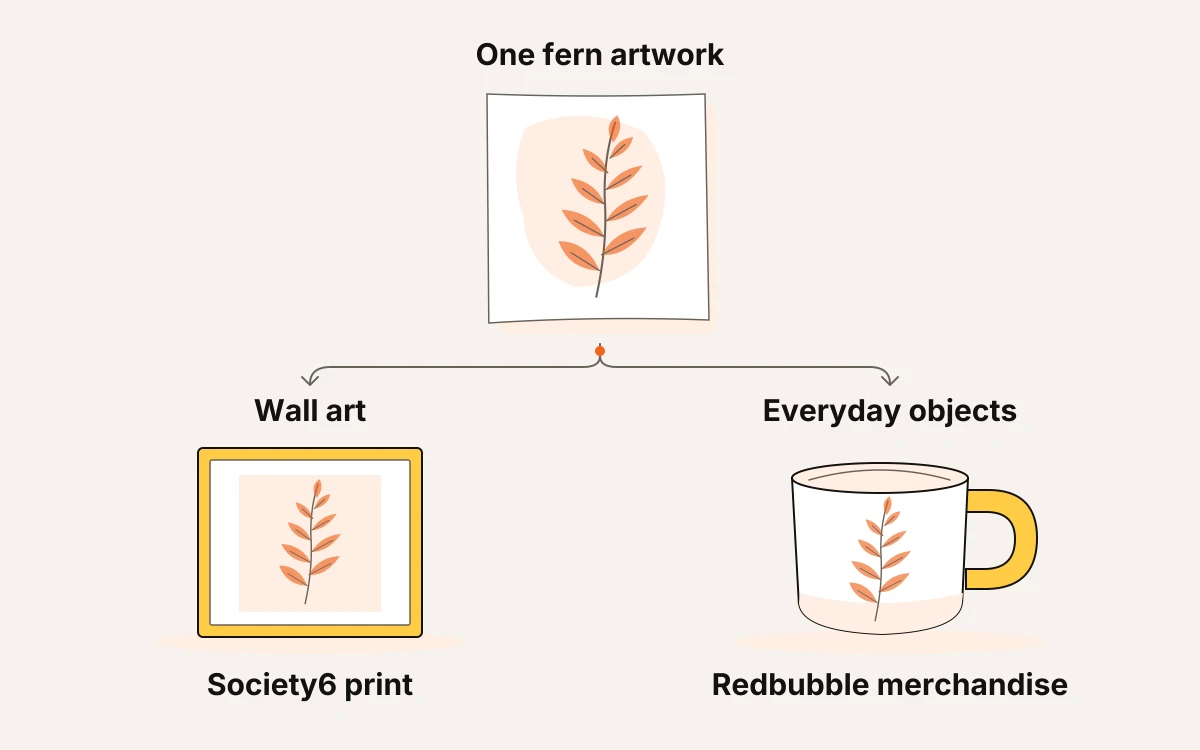
Start with one fern painting. That lets you compare the options without uploading your whole collection:
- Society6 print: Keep the whole painting, including the white space around the leaves. This fits a shop known for quiet botanical wall art.
- Redbubble merchandise: Try the fern on a mug. The leaves should still be easy to recognize at that size. Place them so the design looks made for the mug, rather than squeezed onto it.
Choose the fern product that fits what your customers already ask for. For the Society6 print or Redbubble mug, check your earnings under the marketplace’s current royalty or markup rules. Include any applicable deductions, then assess whether the buyer’s delivered price suits your customers. If your earnings are too low, change the product before preparing more artwork.
For the fern’s Etsy listing, compare the print or mug through Printful, Printify, or Gelato. Subtract production, shipping, Etsy fees, and other applicable costs from the amount your buyer pays. Continue with the product only if what you keep meets your earnings target.
Before preparing that listing, check the fern file at the size you plan to print. You can use eMarketInsight’s free print file DPI checker for this step. The check helps you catch a file stretched too far for its print size.
Run one small product test this week
Use the fern test to decide whether this product is ready to sell.
- [ ] Keep the fern test to one artwork on either the print or the mug. Save the exact file you submit so you can track down any printing problems.
- [ ] Order the sample. When it arrives, check that colors blend smoothly and fine lines print without breaks. The packaging should protect the product. If anything is damaged, photograph it before contacting support.
- [ ] Record the marketplace artist earnings after deductions and the buyer’s delivered price, or your Etsy earnings after all costs. For the Etsy calculation, use the POD (print-on-demand) pricing guide. Proceed only if your earnings meet your target and the delivered price suits your customers.
- [ ] Publish the product only if the sample passes your quality checks and the earnings meet your target. Otherwise, fix the file or change the product before expanding the fern range.