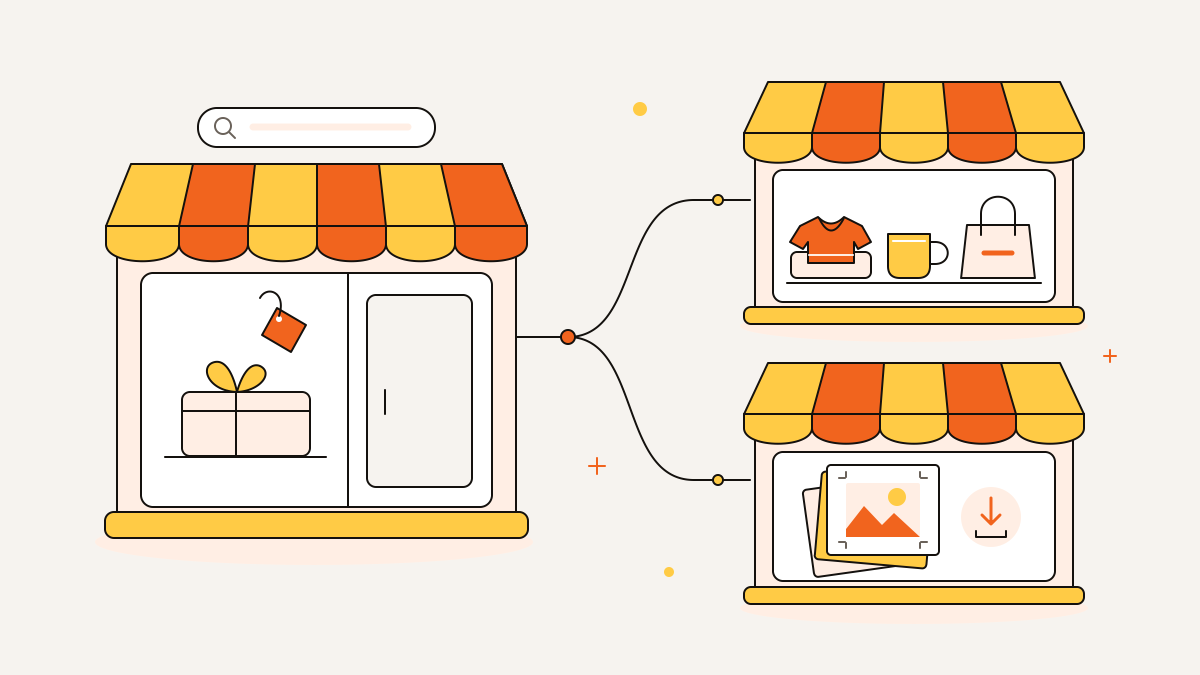
If you’re looking beyond Etsy, Shopify suits a store with your own brand. Wix supports physical and digital products, while Big Cartel fits a smaller product range. For eligible physical products, consider eBay or, if you make product videos, TikTok Shop. eBay restricts electronically delivered goods and requires approval for sellers using ordinary listings. Its alternative is a classified ad in the designated category, where available. TikTok Shop’s US rules prohibit digital downloads. For printables, start with an independent store such as Wix instead.
Your choice depends on how you want to reach customers and how much control you want. Your own store gives you more ownership, but you’ll need to bring shoppers to it. Start with one extra place to sell rather than moving your whole shop. Choose one that fits your print-on-demand products, made when ordered, or your digital downloads. Then work through how a shop selling printables can choose a second place to sell. Keep the test small enough to manage this week.
What changes when you sell outside Etsy
On Etsy, shoppers can find your listing by searching the marketplace. With an independent store, you need a way to bring shoppers to your website.
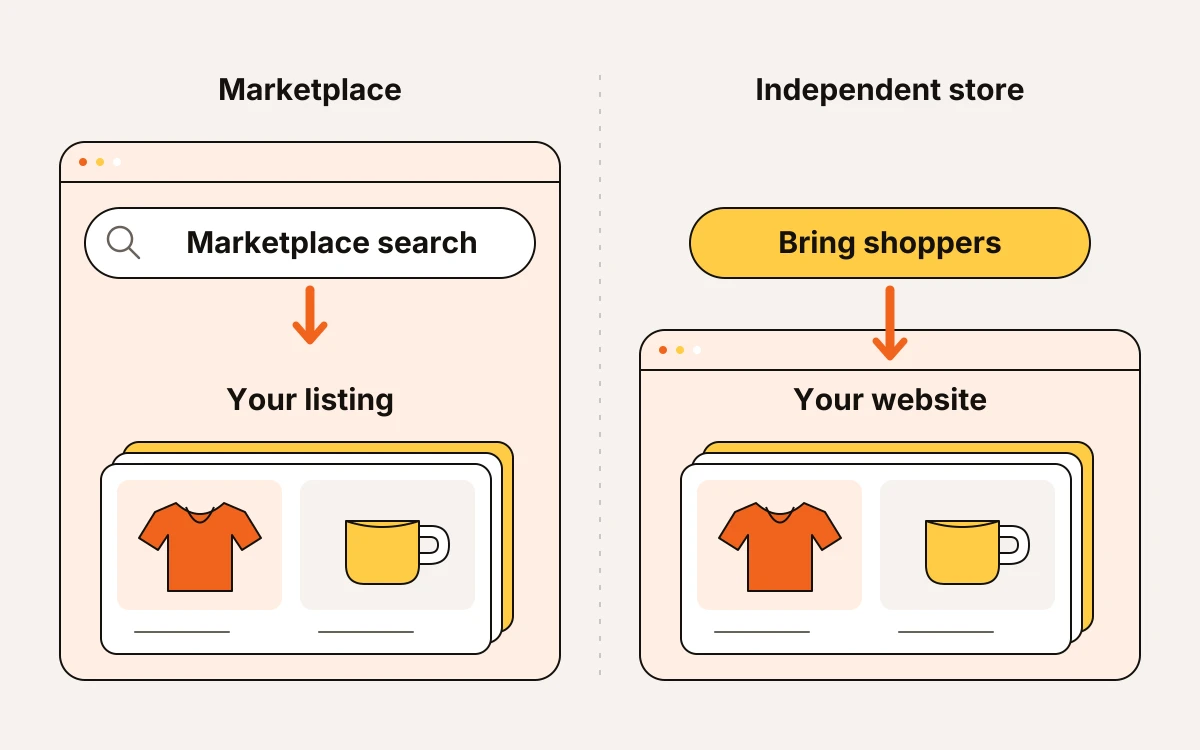
Each option does a different job:
- Marketplaces put your listings where customers already shop. To reach those shoppers, you accept the marketplace’s rules and fees. You then compete for their attention.
- Independent stores let you control your branding: your store’s look and feel. They also give you a place to build an email list with subscribers’ permission. People find your store through search, content you share, ads, or an audience you already have.
- Print-on-demand fulfillment means a supplier makes and ships products without you keeping stock. A connection to a supplier answers “Who prints and ships this?” You still need to answer “Who finds the customer?”
Another platform won’t fix an offer shoppers don’t understand. If your Etsy listing gets views but little interest, check the first photo. Then look at how useful the product is and its price before rebuilding it elsewhere. A confusing printable bundle stays confusing under a new logo.
Say you sell printable pantry labels. Before opening a separate store, make sure shoppers can see which labels they receive. They also need to know the file format, or type, and how they’ll print the labels. They’ll need those same details wherever you sell.
Choose your first alternative by how you'll find buyers
Start with the platform that fits how you already reach shoppers. The work it adds needs to fit alongside your Etsy shop, so choose based on what you can keep doing.
- You have an audience → Shopify. If people already follow your work or subscribe to your emails, Shopify gives you room to build a branded website around your products. Put it first when you want control over how collections, product pages, and your shop’s story fit together.
- You have a small catalog → Big Cartel. Its focus on smaller shops and lean operations makes it worth a look if you sell a tight collection. Big Cartel offers a free plan for smaller shops. Check whether the plan’s current allowances cover the products you want to test.
- You need marketplace discovery for eligible physical products → eBay. It supports fixed-price listings as well as auctions. Its electronically delivered goods policy restricts digital sales, so use the independent-store shortlist for printables. A search for products like yours will help you judge the competition: compare photos, prices, and delivery offers before choosing it. Handmade sellers compete with mass-manufactured goods here. If your product costs more, shoppers need to see why in its customization or design.
- You regularly make videos of eligible physical products → TikTok Shop. Viewers can buy without leaving the app. Digital downloads are prohibited under its US rules; check your market’s product policy before listing. You can also pay creators a commission when their product videos generate sales. This route fits if filming products is already part of your routine. Include creator commissions when checking what each order leaves you.
- You already run a WordPress site → WooCommerce. This plugin turns your existing site into an online shop; it isn’t a separate standalone platform. It’s worth considering if you want to build on that site, with security, backups, and software updates scheduled on your work calendar. If maintaining WordPress already feels like a second job, don’t add checkout maintenance to it.
Match the platform to downloads, POD, or local stock
Choose a platform that can get your product to the buyer the way you need. Before judging how the store looks, check file delivery and how suppliers fill orders. Also check which handmade products qualify and how stock counts stay up to date.
- Digital downloads → Wix. Before moving your files, make a test purchase. Check what the buyer receives and how they get the download. Make sure the files open correctly on a phone, too. If buyers need your help to get their purchase, fix that before uploading your other products.
- Print-on-demand → start with Shopify or WooCommerce. With print-on-demand (POD), a supplier prints and ships products as orders come in. Before choosing either platform, confirm support in your specific supplier’s official integration documentation. Check support for product variants, such as sizes and colors, order routing to the supplier, and tracking updates sent back to your store. A test order lets you check that the right product and shipping details reach the supplier. If you’ll have to copy orders by hand, factor in that work before choosing. The existing Best Print on Demand Sites for Artists guide compares platforms for filling and shipping orders.
- Handmade → Amazon Handmade is for qualifying handmade production, not standard outsourced POD merchandise. If an outside POD supplier makes your products, start with Shopify or WooCommerce instead. For sellers who make qualifying goods, the application asks about materials, tools, workspace, and production methods. Compare your process with Amazon Handmade’s current eligibility rules before applying. When working out what you keep from a sale, include its referral fee, the fee charged for selling.
- Local stock → Facebook Marketplace or Square Online. Facebook Marketplace fits physical items you want to sell within your local community. If you also take payments through a physical card reader, Square Online keeps your stock counts in sync with your online store. This helps prevent selling the same item twice. Buyers can also order online and pick up in person. That’s useful when local shoppers and online buyers draw from the same stock.
A printable shop tests Wix without closing Etsy
Wix is a sensible place to test selling your printable downloads while keeping your Etsy shop running. Say you sell… printable garden planners on Etsy and have social followers who save your planting tips. During the test, send visitors from those social posts to Wix.
Start with an existing product, such as “Printable Garden Planner: Seed Starting and Harvest Log.” Keep the same files, product images, and price. That lets you compare the two stores without changing what you sell. Before sharing the Wix page, make a purchase yourself. Make sure the download arrives and opens correctly.
Use eMarketInsight’s free Etsy fee calculator to work out what a current Etsy sale leaves you. Enter your actual selling price and the costs that apply to your sale. Compare that result with the Wix store charges and fees you’ll pay to process payments. Include all those costs. The amount deposited after an order won’t give you the full comparison.
Track the decision in a small comparison sheet:
- Costs: Etsy selling costs versus Wix store and payment costs, including any paid extras.
- Orders: Completed purchases in each store, with visits from social links recorded separately.
- Work: Time spent setting up products and answering download questions.
If social visitors arrive but don’t buy, review the product preview, price, and checkout. Do that before adding more planners. If orders leave enough after costs to make the extra work worthwhile, add more products to Wix gradually.
Keep your Etsy listings active throughout the test. Use the Wix results to decide whether to add more products and whether a move makes sense. Opening a storefront alone isn’t a reason to move.
Your checklist for launching one small test this week
This week, get one purchase path working so you can check it from payment through delivery. Keep the test small enough to manage alongside your Etsy shop.
- Choose one channel and a small set of products that already sell in your shop.
- Before publishing, check whether your products are eligible, what the platform charges, and whether its buyers match your products. For downloads, verify digital file delivery. For POD, confirm how orders reach your supplier.
- Run through payment, confirmation, and delivery. If you sell downloads, open the file as a buyer would. For a physical order, check that the variant and shipping details are correct.
- Keep physical stock quantities aligned across channels, especially Etsy and Amazon. If you can’t synchronize inventory, allocate separate stock to each.
- Put a review date on your calendar before you expand the catalog. At that review, compare what’s left after costs, where traffic came from, and how much time you spent answering questions.